
A Pack-Away Farm Play Corner for Visits to Grandparents
A play space at grandparents’ house needs to fit around the people who live there. A table might be available...
View details
A magnetic play wall in a living room needs to work during play and when the room is needed for something else. Children may be arranging animals while you sit nearby, but later those same seats and tables need to be available for visitors.
A useful reset gives loose pieces somewhere to go, leaves the wall in a display state you’re happy with, and restores the parts of the room people need next. The installed surface can stay where it is.
That makes “ready for guests” a household decision. A finished magnetic scene might remain on the wall while crayons, spare pieces, and toys come off the coffee table.
A living room reset is easier to define when you name what needs to become usable. “Tidy everything” leaves plenty of room for extra work. “Clear the sofa, coffee table, and route from the door” gives you a finish you can recognize.
Your endpoint might include enough seats for visitors, a surface for drinks, and a clear route through the room. The play wall can still look like a place where children play.
Choose the endpoint before deciding how much to put away. You can leave a display intact and still return the room to shared use.
The storage destination deserves as much thought as the play display. A container that looks suitable when empty may be awkward once magnets, drawing materials, and unfinished activities need to fit inside.
Keep the routine manageable by separating two decisions: where things go and how carefully they need to be sorted.
Look for an existing drawer, shelf compartment, or suitable container near the living room play corner. Check whether it can hold the materials you actually use without moving other belongings each time.
Measure the usable space inside it, including any dividers. Then try putting the collection away. If you have to stack pieces in a precise order to close the drawer, consider keeping fewer materials in the room or using a different compartment.
Storage appearance is only part of the choice. The American Academy of Pediatrics’ toy box safety advice highlights hazards from falling lids and children becoming trapped inside boxes. Consider those details before using a chest or similar enclosed storage for toys.
Some collections benefit from separate compartments. Others can share a container without making the next play session difficult. Let the next use guide the amount of sorting.
You don’t need a separate home for every individual piece. You do need a home that makes sense to whoever puts things away and takes them out again.
A shared family room play wall can have an everyday display that remains between activities. Decide what that means in your home: a finished scene, a few favorite pieces, or a mostly clear surface.
Look at the wall from the sofa and the entrance. Those views can help you choose how much you want to leave displayed. A close-up view at play height may feel quite different from seeing the whole wall beside furniture and other belongings.
Drawing adds a separate care decision. Tix&Mix’s board care instructions recommend a damp, soft microfiber cloth and advise against leaving writing on the surface for a long time. Build any needed wiping into the routine rather than assuming every mark can stay until another day.
A repeatable order gives you fewer decisions to make when company is expected. Work through loose pieces, the wall display, and the room’s shared furniture, adjusting the sequence if your layout calls for it.
Bring the storage container to the activity if that makes gathering easier, then return it to its usual place. Collect pieces from the floor, tables, and seating as well as those coming off the board.
Follow each product’s age guidance and supervision instructions. Set aside damaged pieces rather than returning them to play storage.
Loose high-powered magnets require particular care. The CPSC’s magnet guidance explains the serious harm they can cause if swallowed. They should not become casual additions to a children’s play wall. Suspected magnet ingestion requires immediate medical attention.
Use the display choice you made earlier. Put spare pieces away, preserve the agreed arrangement, and clean drawing areas as directed.
If unfinished play needs to come down, offer a concrete way to return to it. You might take a photograph together or keep the relevant pieces grouped in their container. A photograph records the arrangement, though it won’t preserve every part of the play itself.
Avoid making each reset a decision about every magnet. A familiar rule, such as keeping one chosen scene, gives the household a clearer routine.
Finish by checking the room from a visitor’s point of use. Can someone reach a seat, sit down, and put a drink on the intended surface?
Return the storage container to its destination. Check that it hasn’t become a new obstacle beside the sofa or in front of a cabinet. Look under nearby furniture for stray pieces.
This final pass matters because a clear wall doesn’t necessarily mean a usable living room. The reset is complete when the spaces you identified are available again.
Try the reset after ordinary play and notice which part requires the most rearranging. You don’t need a stopwatch to identify a drawer that won’t close or a container that has nowhere to go.
If gathering pieces is manageable but putting them away is awkward, reconsider the storage capacity. If wiping takes attention every time, account for that when deciding which materials to offer before visitors arrive. If the sofa repeatedly becomes a temporary holding area, give those items a destination that doesn’t depend on an empty seat.
If you’re still choosing the surface itself, use the separate board size guide for that decision. Keep the reset focused on what happens after play, rather than repeatedly changing the whole arrangement.
A magnetic play wall does not need to come down as part of a routine guest reset. Leave the installed surface in place and focus on loose materials, the chosen display, and the furniture needed for visitors. Follow the manufacturer’s instructions for installation and removal rather than treating an adhesive board as something to peel off whenever you host.
Every toy does not need to disappear from a shared living room. Your household can choose what remains visible while clearing the seating, tables, and routes needed next. The finish should suit how you use the room, whether that includes a magnetic scene on display or a mostly clear board.
When considering a play wall, think about how the surface will look between activities as well as during them. Our magnetic wall boards come in a range of colors, giving you a way to consider the installed surface alongside the room’s existing furniture and finishes.
Before choosing more play pieces, identify where they’ll go when the sofa and coffee table are needed. A board color you like, a manageable collection, and a storage destination that works together can give your living room play corner a clear place in everyday family life.
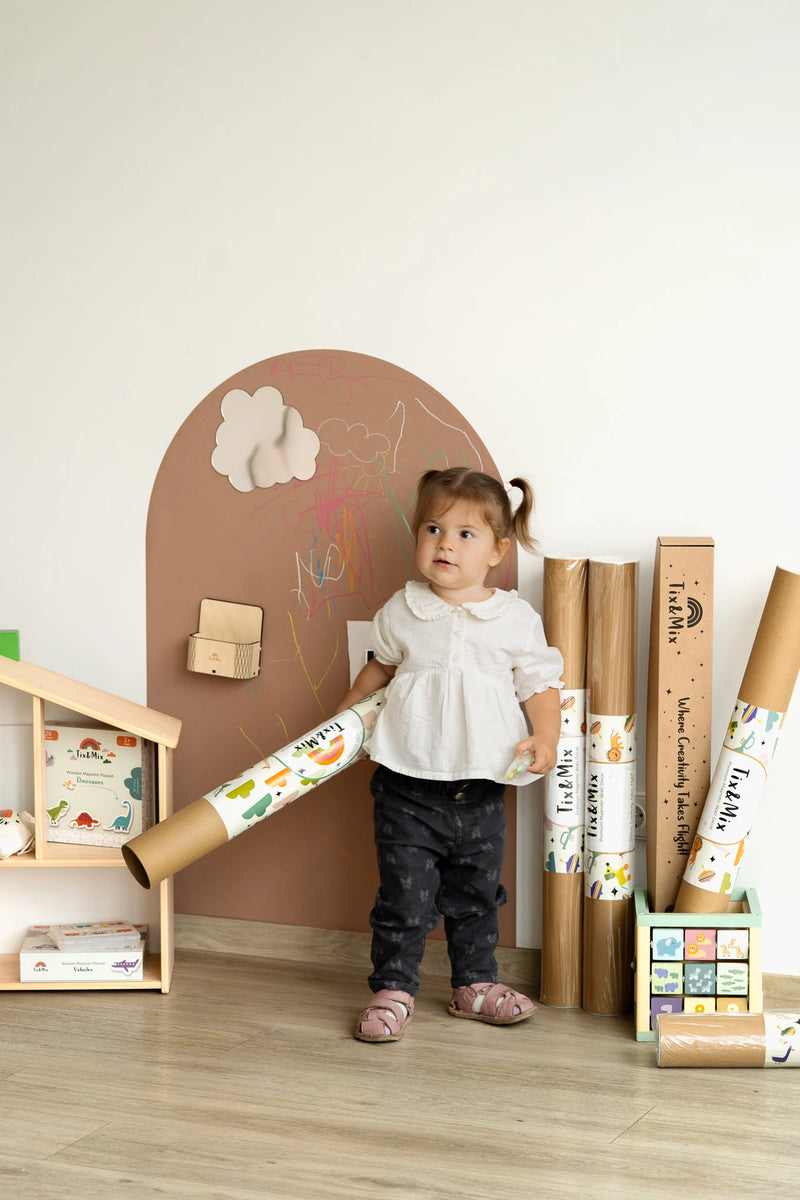
A peel-and-stick play wall for magnets and crayons. No drilling, removes cleanly. From €59.

A play space at grandparents’ house needs to fit around the people who live there. A table might be available...
View details
In this guide, we'll walk through practical, functional ways to use magnetic wall decor, magnetic wall decorations, magnetic wall art,...
View details
This guide is built specifically around arch magnetic wall decal ideas — not generic playroom tips. Every idea below covers...
View details